VBA Compiler: Protect and Monetize Your VBA Code
A VBA compiler transforms your macros into compiled DLLs that cannot be decompiled. Stop sharing your source code - distribute professional, licensed applications instead.
What Is a VBA Compiler?
A VBA compiler is a tool that converts your VBA source code into compiled bytecode stored inside native Windows DLL files. Your procedures no longer exist in the file you ship - they are replaced by generated wrappers that call a binary representation which cannot be read, copied, or decompiled back to the original source.
This is fundamentally different from VBA project passwords (which can be removed in seconds) or code obfuscation (which still leaves your logic visible). A VBA compiler produces a completely different format, so there is no readable copy of your algorithms to steal.
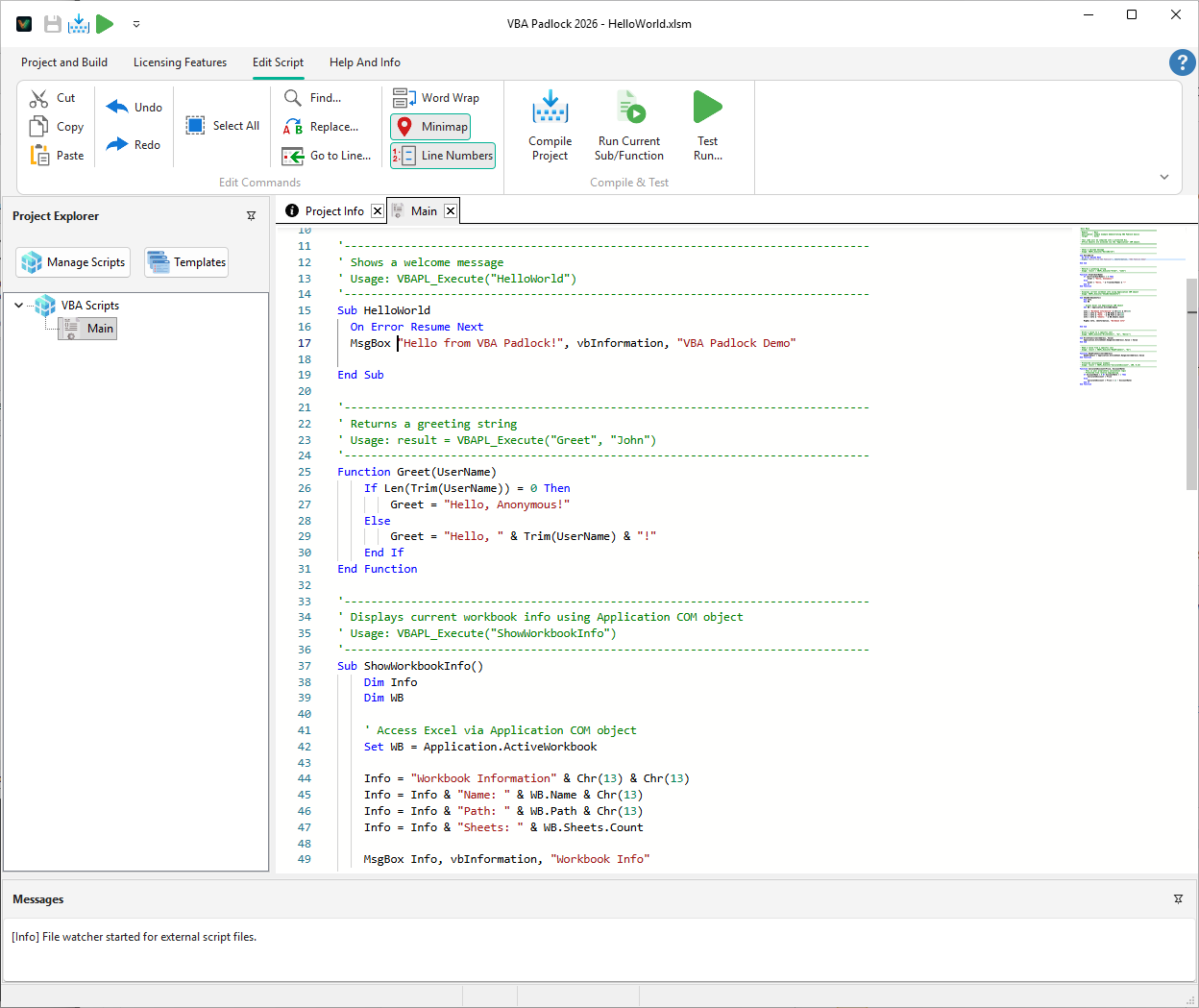
VBA Padlock is a VBA compiler for Microsoft Office that handles the entire pipeline: macro extraction, per-procedure analysis, bytecode generation, DLL packaging, code signing, and automatic wrapper and bridge injection. You open your existing Office file, review the analysis, click Produce, and receive a protected copy with signed DLLs ready for distribution. See how automatic protection works in the documentation.
Why You Need a VBA Compiler
If you distribute VBA code - to clients, customers, or colleagues - a compiler is the only way to protect it for real.
Protect Your Intellectual Property
Your VBA source code contains proprietary formulas, business logic, and algorithms. A VBA compiler eliminates the source entirely - end users get the functionality without ever seeing how it works.
Sell Your VBA Applications
You cannot sell VBA code that anyone can copy and redistribute. A VBA compiler locks your code inside signed DLLs with built-in license keys, hardware locking, and trial periods - so you can charge for your work.
Distribute Professionally
Runtime DLLs are Authenticode-signed, so Windows names G.D.G. Software as the publisher. Your clients receive a professional package instead of an unprotected macro file.
Prevent Unauthorized Sharing
Without a compiler, anyone with the file has the code. With hardware-locked licensing, each copy is bound to a specific machine. Even if the file is shared, it won't activate without a valid key.
VBA Compiler vs. Other Protection Methods
Not all protection is created equal. Here is how a VBA compiler compares to passwords and obfuscation.
Protection level
None
VBA Password
Bypassed in seconds with free tools.
- • Source code fully accessible after bypass
- • Not encryption - just a flag in the file
- • No licensing or distribution features
Protection level
Low
VBA Obfuscation
Algorithm logic remains visible and reversible.
- • Code still present in VBA Editor (garbled names)
- • Automated deobfuscation tools exist
- • No licensing or distribution features
Protection level
High
VBA Compiler (VBA Padlock)
Source code eliminated. Bytecode cannot be decompiled.
- • Source code physically removed from Office file
- • Compiled bytecode inside signed DLLs
- • Built-in licensing, activation, and distribution
How VBA Padlock Works as a VBA Compiler
From your existing Office file to signed, distributable DLLs in four steps.
Open Your Office File
VBA Padlock extracts your macros and analyzes them per procedure - nothing to copy or paste.
Review and Produce
The Protection Review shows what moves into the DLL. Click Produce to compile your VBA into bytecode inside native DLL files.
Add Licensing
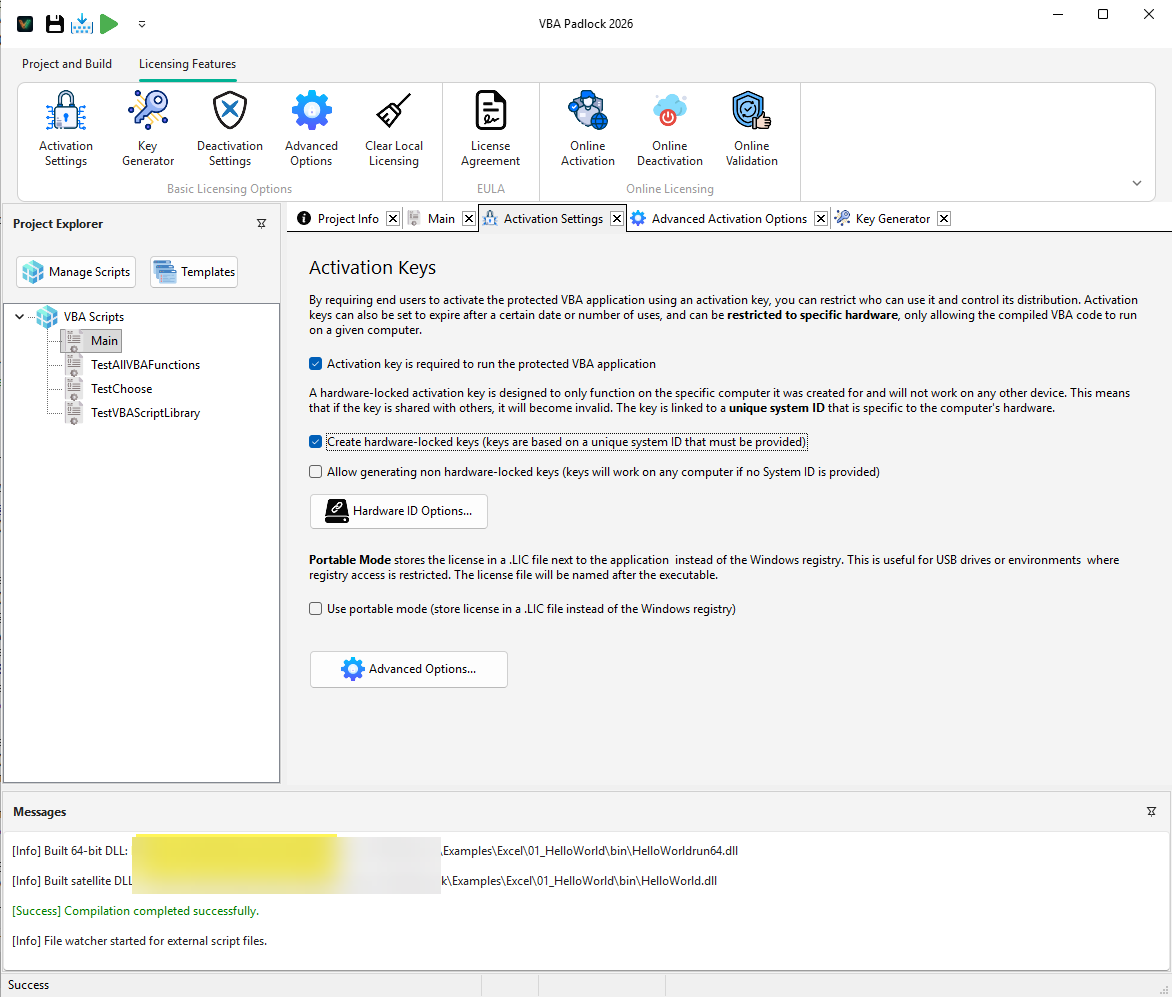
Configure license keys, hardware locking, trial periods, and online activation - all optional.
Distribute
Ship the protected copy with its bin/ folder of signed DLLs. End users need only Microsoft Office.
More Than Just a VBA Compiler
All Office Applications
Compile VBA from Excel, Word, Access, and PowerPoint - workbooks, add-ins, documents, templates, and databases.
32-bit and 64-bit DLLs
Every compilation produces both architectures. The VBA Bridge loads the right one automatically.
Authenticode-Signed DLLs
Runtime DLLs are signed by G.D.G. Software, so Windows names the publisher instead of showing Unknown Publisher.
Integrated Licensing System
License keys, hardware locking, trial periods, subscriptions, online activation, EULA - all built into the DLL.
Online Activation Server
Free PHP activation kit included. Deploy on your own server for fully automated license management.
Professional IDE
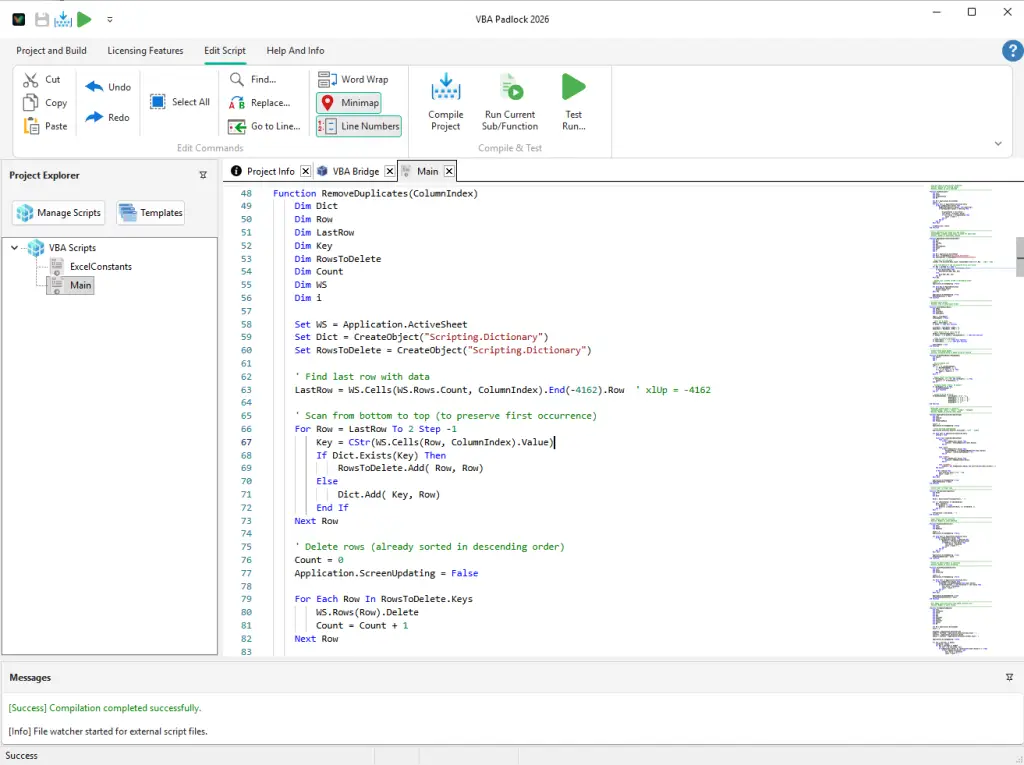
VBA Padlock Studio: ribbon interface, code editor with protection markers, Project Explorer, key generator, Run DLL Function, and one-click distribution.
Learn More
Detailed compilation pipeline and output format
Multi-layer copy protection for your VBA code
Why VBA passwords don't protect your code
Why obfuscation is not enough
Monetize your macros with licensing
Full feature list: compilation, licensing, distribution
Ready to Monetize Your VBA Projects?
Download VBA Padlock and start selling protected Office solutions. One-time purchase, no royalties, no subscription.